

Last year at Born at the Right Time, inspired by our work with the Northern Care Alliance SLT team in Bury, we spent time exploring local area SEND inspections. We hoped to identify areas with similar training needs and understand where our work might be most helpful.
Google’s Notebook LM helped us analyse the reports and look for themes of interest, and one theme stood out immediately.
We looked at reports from 2024 onwards, and some earlier reports where a short-term review was due in the next few months. This wasn’t a piece of formal research; it was a fact-finding exercise to inform our marketing strategy. We wanted to understand whether there were areas that might particularly benefit from our training and services, in the same way others already had.
The findings were telling. While many organisations were praised for involving families at a strategic level, this was not reflected in parent reports of their day-to-day lived experience.
Of the 45 area inspection reports we looked at, 36 said there were strong strategic partnerships with organisations such as parent carer forums, but that this failed to translate into positive experiences for families.
This reflects what we so often see in our own work at Born at the Right Time: the rhetoric doesn’t always match the reality for families.
Where strategic partnership is working
Several authorities in areas with diverse populations were described as involving parent carer forums strategically, and this included the commissioning of services.
In some areas SEND Information, Advice and Support Services (SENDIASS) were cited as critically important services for families.
Where the disconnect still shows
 Communication was cited variously as being poor, weak, ineffective or lacking. There were examples of parents in some areas reporting phone calls going unanswered, and information being unclear or inconsistent. In some areas, information was not inclusive or available in accessible formats.
Many families report that, despite areas showing evidence of strategic-level engagement, they do not trust the systems there to support them. In some areas, support was seen as driven by crisis, and earlier support that could have prevented these crises was not available.
In some areas the strategic vision was not communicated well or known by staff or by the families accessing services.
None of this will come as a surprise to many of us navigating support for our children, or to those providing the day-to-day services around them. Now, amid SEND reform consultation it can feel like this disconnect is writ large across the whole country. Parents are feeling mistrust in the system and in the process of consultation because we have lived with this disconnect for years.
Now, amid SEND reform consultation it can feel like this disconnect is writ large across the whole country. Parents are feeling mistrust in the system and in the process of consultation because we have lived with this disconnect for years.
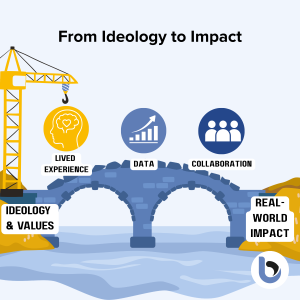
The heart of what we do.
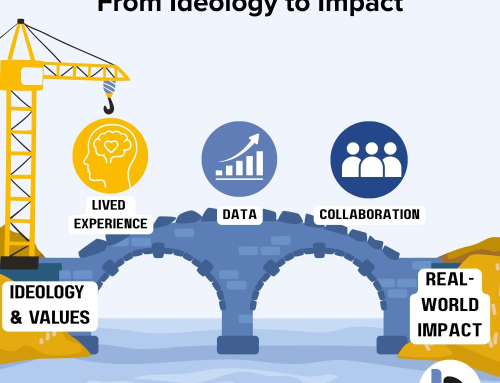
Here at Born at the Right Time, bridging that gap is at the heart of what we do, bringing together our lived and loved experience, the research and data that supports it, and generating real-world solutions for organisations. We see first-hand how it is possible to make the strategic promise come alive in the lives of families of children with complex disabilities.
Bridging the Gap
Meaningful co-production: This takes time, but it begins by asking the right questions, maybe a subtle shift from ‘what matters for you?’ to ‘what matters to you?’ This goes beyond the strategic level and has the potential for every practitioner to have a role. Be curious. Don’t come to families prepared with answers; come ready to ask questions. The more you can understand families and what they need, the more you will be able to help them in ways that are meaningful and motivating. There are some great tools available to help with this; we love ‘The F-Words’.
Communication that’s individualised: ‘What is the best way for me to contact you?’ A simple question and a note on the file might be all it takes to know that a parent prefers a text, maybe they work and can pick up later, or maybe it allows them to use translation features on their phone. If that feels inconvenient or like a lot of work, just think how much time you save on wasted appointments and calls.
 Don’t call me Mum (or Dad): Find out what people prefer to be called. I think most parents can identify a moment when they were introduced at a meeting as ‘Mum’ or ‘Dad’ just after everyone else had been introduced by name and job title. It matters for us to be included and feel like part of a team, that things are being done with us, not to us. Some research shows about half of parents would prefer not to be called ‘Mum’ or ‘Dad’ in meetings and appointments, while other research suggests only 25% of clinicians use a parent’s name.
Rebuilding trust between families and local authorities is complex, and it will take time. Cultural and strategic change happens over years, not days. But in the meantime, practitioners still have the opportunity to make families feel seen, heard and understood, or not, through the small, everyday interactions that shape people’s experience of support.
Cultural and strategic change happens over years, not days. But in the meantime, practitioners still have the opportunity to make families feel seen, heard and understood, or not, through the small, everyday interactions that shape people’s experience of support.
If you would like to learn more about how Born at the Right Time can help you or your organisation contact us on training@bornattherighttime.com.





Leave A Comment