

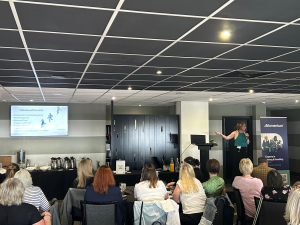
 Talking to a packed room at the 24-Hour Postural Care Conference hosted by Seating Matters in Newcastle, I told a story.
I asked people to imagine a school full of wonderful, deeply loved children with a dark cloud hanging over it. The road just beyond the railings regularly claims the lives of students. Cars drive too fast, leading to devastating accidents, life-changing injuries and sometimes death. Futures are cut short, opportunities disappea, families are left heartbroken and waves of grief spread through the whole community.
Children are dying, and people know why
Every day at 3pm, children rush out of the school gates while cars speed past. The collisions are predictable.
And because they are predictable, they are preventable.
Something needs to be done…and the chosen solution is a paediatric trauma centre built right next to the school.
A state-of-the-art specialist service with orthopaedic surgeons, anaesthetists, and emergency teams ready to respond. The time from accident to treatment is dramatically reduced, making successful intervention far more likely.
I can guess what you’re thinking…is that the best way? Couldn’t accidents have been prevented?
And this is what 24-hour postural care feels like in the UK in 2026
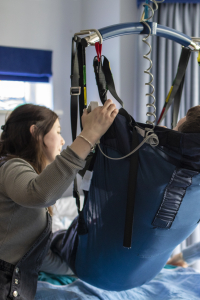
We know that gravity, asymmetrical positioning, and spasticity affect bodies with limited movement.
We know these forces change body shape in predictable ways.
We know those changes have life-changing and, ultimately, life-limiting consequences.
But we have acted like the community around that school. Our response is often focused on what happens after the damage has occurred. We have built the trauma centre but without changing the predictable, life threatening traffic.
We have developed an ever-growing range of specialist interventions to realign bodies once significant changes have taken place: complex surgeries, specialist equipment, intensive therapies, and highly skilled clinical input.
What is the traffic calming equivalent in postural care?
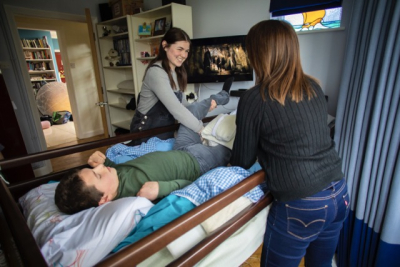
Our speed bumps are supported lying and supportive seating
Opportunities to stand and move when it’s comfortable, enjoyable and meaningful
Our cameras and warning signs are our assessments and monitoring – like the Goldsmith Indices of Body Symmetry
It might not be as glamorous or dramatic as the fast-paced, high-tech trauma department.
But it might prevent predictable harm.
We must stop accepting these outcomes as inevitable. The predictable nature of body shape change offers us the opportunity to create a different future. One where proactive, personalised 24-hour postural care is embedded within healthcare and social care from the outset.
Predictability should not lead to resignation but rather prevention
Proactive 24-hour postural care is not an optional extra. It is not a luxury. It is not something to be considered only when problems become severe. It is good healthcare.
Our current piecemeal, siloed approach to provision falls far short of what people deserve. When we know harm is predictable, and we fail to act to prevent it, we need to ask ourselves some difficult questions about the systems we have built.
Are we complicit if we aren’t calling for change – for a collective drive to no longer accept predictable changes in the bodies of disabled people who have limited movement?
Does the current implementation gap between guidance and provision amount to neglect?
Do the systemic failures which exist culminate into a safeguarding issue on a grand scale?
We are part of a system which isn’t protecting children and adults but rather standing back and watching the car crash.
We can’t keep making excuses for our failures, we need to safeguard the future of disabled people with limited movement.
Find out more about our 24-hour Postural Care Courses here and learn more about preventable changes to posture through supported lying from Simple Stuff Works






Leave A Comment